ImOn Whole Home Wi-Fi
- 4.2
- Rating
- 10.00K
- Installs
- Free
- Price

 Analysis by App-foxy
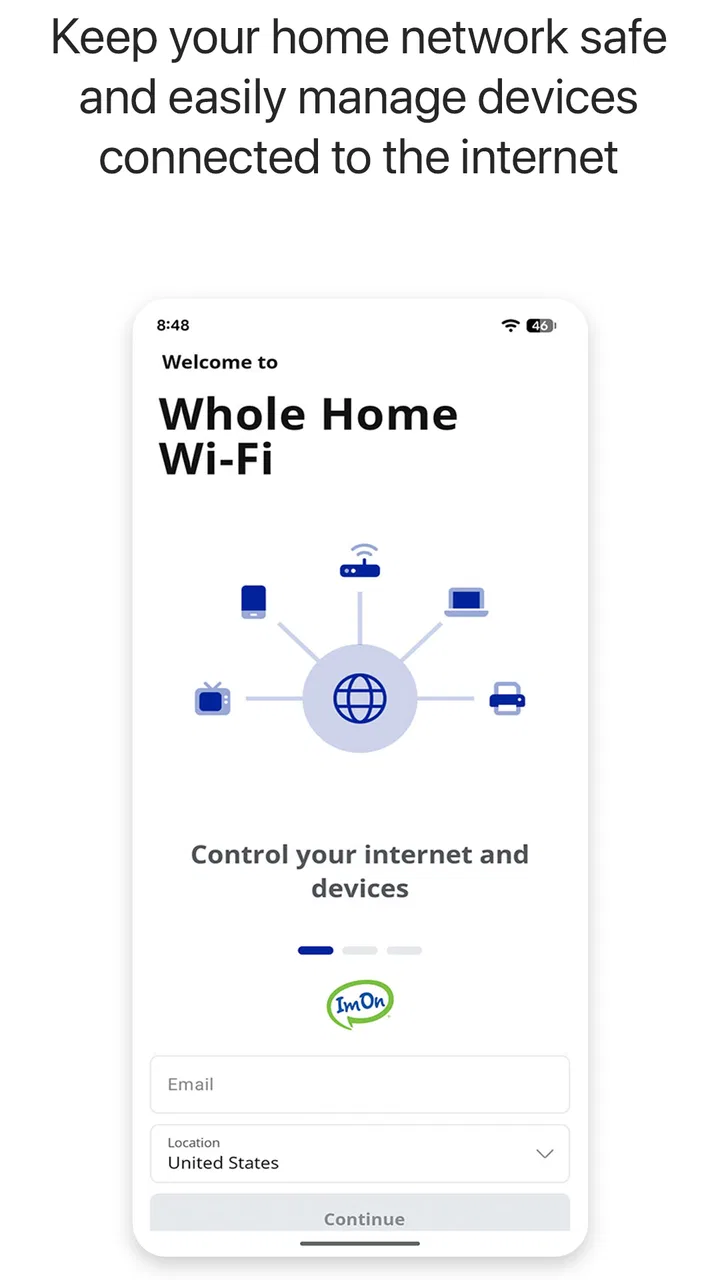
Home Wi-Fi is easy to ignore when everything works, but the moment a video call stutters or a visitor asks for the network password, I want a simple way to understand what is happening. ImOn Whole Home Wi-Fi is built for that everyday gap. It is a free House & Home app from ImOn Communications, LLC that lets me monitor and control my home Wi-Fi network from a phone. After using it, I see its main appeal less as a flashy smart-home extra and more as a practical control panel for people who want fewer mysteries around their connection.
The first impression is straightforward: this is not trying to replace every smart-home app on my phone. Its purpose is narrower and more useful when that purpose matches my setup. I can use it when I need a quick view of the network, when I want more control over connected devices, or when I am trying to make sense of a problem before calling support. That focus helps the app feel approachable, although it also means its lasting value depends heavily on whether I regularly need network management rather than checking it once and forgetting it.
What feels useful at the beginning, and what keeps it relevant later
I find the beginning most useful when the app gives me a clear place to start, rather than asking me to learn every network detail at once. That first look can also help me decide which household routines would benefit from a quick check and which are better left alone. From there, the question is how comfortably different people can navigate those checks.
You May Also Like

 AccuWeather: Weather Radar
AccuWeather Review: A Quick, Clear Forecast for Everyday Decisions
For everyday plans, the best forecast is the one you can understand quickly. AccuWeather makes rain timing, radar, and local conditions easy to act on, with a few trade-offs.

 Hill Climb Racing
Why Hill Climb Racing Still Turns Crashes Into One More Run
A tiny car, a bumpy hill and one more upgrade: Hill Climb Racing keeps resurfacing because its simple chaos makes every near-miss feel personal.

 AliExpress - Shopping App
AliExpress Makes Global Shopping Feel Personal, but Shoppers Bear the Risk
AliExpress turns a global marketplace into a pocket-sized discovery engine. Its reach is useful, its shopping loop compelling, and its trade-offs easy to miss.

 Lords Mobile: Kingdom Wars
Lords Mobile Is a Kingdom-Building Routine, Not a Quick Match
A case-by-case verdict on the building, battles, device demands, and social commitments that make Lords Mobile rewarding for some players and exhausting for others.

 PDF Scanner app - TapScanner
TapScanner Makes Paperwork Easier to Capture, Check, and Share
TapScanner makes scanning with a phone feel less like a rescue operation and more like a dependable step in getting work done. Its capture tools are useful, though not flawless.

 Block Blast!
 Shows How Much a Puzzle Game Can Leave Out
A quiet grid game shows why puzzle players increasingly value instant clarity, repeatable skill and low-pressure play—and where the genre still needs to catch up.
More From Our News Desk
View All News


The first week: a clearer view of the home network
During the first few days, the strongest benefit is awareness. Instead of treating the home network as an invisible service coming from a box in another room, I can use the app as a place to inspect and manage it. That change is especially helpful in a busy household, where phones, televisions, tablets, consoles, speakers, and work computers may all be competing for attention. Seeing the network through one dedicated app can make ordinary troubleshooting feel less like guesswork.
I also like the idea of having network controls in the same place as the monitoring tools. In practice, that matters because noticing a problem and acting on it are usually connected. If a device is behaving strangely, I do not want to identify it in one tool and then search through unrelated phone settings for the next step. The app’s value comes from bringing those two parts together: observing the home connection and making a change when needed.
A realistic example is a family evening when a child’s tablet is still connected while an adult is trying to work from home. The useful question is not simply whether the Wi-Fi is on; it is which devices are active and whether the household needs a quick adjustment. ImOn Whole Home Wi-Fi gives that situation a more direct starting point than unplugging equipment or opening a browser-based router page. It does not remove every networking decision, but it makes the first investigation more manageable.
The app is also a reasonable fit for people who are uncomfortable with traditional router administration. Many router interfaces expose technical terms before explaining what they mean. A provider-focused mobile app can feel less intimidating because it is designed around the home connection rather than around a long list of networking settings. I would recommend beginning with observation instead of changing several controls at once. That makes it easier to tell whether a later improvement came from the app or from an unrelated change in the household.
Practical habits that make the controls more valuable
The most useful habit is to check the network only when there is a reason, not to turn the app into another dashboard that demands constant attention. I would open it when a device cannot connect, when a new device joins the home, or when the household’s usage pattern changes. This keeps the app tied to real decisions and avoids the fatigue that comes from repeatedly checking information that has not changed.
Another worthwhile habit is naming devices carefully if the app allows the connected-device list to be organized. A list full of vague device labels is much less useful than one that helps me recognize the living-room television, a work laptop, or a guest’s phone. I would do that gradually rather than trying to identify everything in one sitting. The goal is not perfect administration; it is making the next troubleshooting moment faster.
There is also a privacy and household-boundary consideration. Network controls affect other people in the home, so I would avoid making changes casually, especially when someone is working, studying, or using an important call. A control that is convenient for one person can be disruptive for another. The app is most helpful when it supports a shared agreement about how the connection is managed, rather than becoming a silent way to interfere with someone else’s access.
Why the month-to-month value is more modest but more practical
After the novelty fades, the app’s value becomes less about discovering the network and more about reducing small annoyances. I would not expect to open it every day. Instead, its recurring usefulness comes from being available at the moment a problem appears. That is a good trade-off for a utility app: it does not need to entertain me constantly if it can save time during the occasional connection issue.
This makes it particularly suitable for households with changing device habits. A home office, children’s devices, streaming equipment, and visiting guests can create a network that feels different from week to week. A dedicated control app gives me a consistent place to start, even when the people and devices using the network keep changing. The benefit is cumulative rather than dramatic: a few less confusing troubleshooting sessions can justify keeping it installed.
Its free price also lowers the commitment. I do not have to decide whether a subscription is worthwhile before trying a basic network-management tool. That matters because the app’s usefulness is personal. Someone living alone with a stable setup may rarely need it, while a larger household may appreciate having quick access to monitoring and controls. Since there is no purchase decision to recover, keeping it installed for occasional use is easier to justify.
The app has reached a 4.2 average from around eighty-seven ratings, with more than thirty written reviews, and it has passed ten thousand installs. Those figures suggest that it has a real user base without making it seem universal. I would interpret that as a reason to judge it by fit rather than popularity. It is a specialized companion for an ImOn home network, not a general-purpose Wi-Fi manager that I would expect to work identically with every internet provider.
Where it fits beside the usual alternatives
The obvious alternative is the router’s own web interface. That option can expose more technical detail and may be preferable for someone who wants advanced configuration. However, browser-based administration often feels like a maintenance task rather than something I can comfortably use from the sofa. ImOn Whole Home Wi-Fi is more appealing when I want a mobile-first way to monitor and control the household connection without navigating a dense settings page.
Another alternative is the internet provider’s general account app. An account app is usually better for billing, service information, or account-level tasks, while this app is focused on the behavior of the home network itself. I would not treat them as interchangeable. If I need to manage my service account, I would look elsewhere; if I need to understand the connected home, this is the more relevant tool.
Third-party network scanners can be useful for identifying devices or diagnosing local problems, but they may require more technical interpretation and may not provide the same provider-specific controls. ImOn Whole Home Wi-Fi is a better choice for a person who values simplicity and direct connection to the supported home setup. A technically experienced user who wants detailed diagnostics, broad hardware compatibility, or fine-grained configuration may still prefer a dedicated networking tool.
The maintenance burden: low effort, with a few conditions
For normal use, the maintenance burden should be fairly light. I would keep the app updated and make sure the phone remains able to reach the home network when I need to manage it. The current version is 26.2.1, and it requires Android 10 or later, so compatibility is an important practical check before relying on it. On a supported Android phone, the basic routine is simple: install it, use it when needed, and avoid changing settings without understanding the household impact.
The bigger maintenance issue is not the app itself but the accuracy of the network’s device list. Homes accumulate old phones, replaced televisions, temporary visitors, and devices that are rarely used. If the list becomes confusing, the monitoring side loses some of its value. I would periodically review unfamiliar entries, especially after replacing a router-connected device or changing how a household member connects. That short review is more useful than repeatedly opening the app without a clear purpose.
I would also avoid treating the app as a substitute for basic physical checks. A mobile control panel cannot fix a disconnected cable, a powered-off network device, or a service interruption outside the home. When a problem appears, I would first check whether the issue affects one device or the whole household, then use the app to narrow the situation. This simple order prevents me from spending time inside the app when the real cause is physical or service-related.
For families, the app may need a small amount of coordination. Decide who is allowed to change network controls and explain what a change might affect. For a household with several adults, that conversation can prevent accidental interruptions. For a single user, the process is easier, but the same principle applies: make one change at a time and observe the result before continuing.
Sources of fatigue after the initial discovery
The first source of fatigue is repetition. Once I know which devices are normally connected and the network is stable, there may be little reason to inspect the app frequently. That is not a flaw in the core idea, but it does limit the sense of ongoing engagement. Anyone looking for a rich smart-home hub with automation, entertainment controls, or a broad collection of device integrations may find this app too narrow.
The second is dependence on the supported ImOn setup. The app makes the most sense as a companion to an ImOn home Wi-Fi service, so it is not the right recommendation for someone who wants a provider-neutral tool. If I move to another internet provider or use networking hardware outside the intended arrangement, the app may no longer be the natural control point. That dependence is acceptable for a provider companion, but it should be part of the decision before I build my household routine around it.
The third is the temptation to overmanage. Monitoring can be useful, but it can also turn ordinary household behavior into a series of unnecessary interventions. A device appearing on the network is not automatically a problem, and a temporary slowdown does not always require a control change. I get better long-term value when I use the app to answer a specific question rather than reacting to every unfamiliar entry or brief interruption.
There is also a learning curve for the people who are least comfortable with networking. The app may be simpler than a router interface, but terms such as connected devices and network controls can still require context. I would introduce it by showing one useful workflow, such as finding a device during a connection problem, instead of presenting every available control at once. That approach makes the app feel like a helpful household tool rather than another technical responsibility.
Who should keep it installed
I think it earns a lasting place on the phone of an ImOn customer who manages a busy home network, shares Wi-Fi with family members, or wants a less technical way to investigate connection problems. It is also useful for someone who occasionally needs to control access but does not want to learn a full router administration system. The free cost makes it easy to keep available for those occasional moments.
I would be more cautious about recommending it to a person who wants detailed network diagnostics, advanced configuration, or compatibility across different providers and hardware. A third-party networking app or the router’s own administration tools may be better for that audience. I would also skip it if my home connection is not part of the supported ImOn environment, because the app’s purpose is tied closely to managing that home Wi-Fi experience.
The age rating is Everyone, which fits the app’s household utility role, although I would still treat network controls as an adult responsibility in a shared home. The developer is ImOn Communications, LLC, and the app was released on August 30, 2022. Those details place it as an established provider companion rather than a brand-new experiment, while the version information and Android requirement make it sensible to check device compatibility before making it part of a troubleshooting plan.
My long-term verdict
After the first-week appeal wears off, ImOn Whole Home Wi-Fi becomes a quiet utility. I do not see it as an app I would browse for entertainment or open out of habit. I see it as a tool that earns its space by being ready when a household connection becomes confusing. That is a narrower form of lasting value, but it is a credible one because Wi-Fi problems are inconvenient precisely when I want a quick, familiar starting point.
My strongest recommendation is to use it deliberately: identify the network situation, inspect the relevant devices, make the smallest sensible adjustment, and then stop. Keep the device list understandable, coordinate changes with other people in the home, and remember that the app cannot replace physical checks or broader service support. Those habits keep the convenience from turning into unnecessary network micromanagement.
Overall, I would keep it installed if I used ImOn home Wi-Fi and wanted approachable control from my phone. It is free, focused, and more practical than a generic dashboard when the goal is managing this particular household connection. Its lasting strength is not constant activity, but dependable access to useful network controls when ordinary home life makes Wi-Fi complicated.
FAQs for ImOn Whole Home Wi-Fi
01What is ImOn Whole Home Wi‑Fi?
ImOn Whole Home Wi‑Fi is a companion app for managing a compatible ImOn home internet and mesh Wi‑Fi service. After signing in, users can typically view connected devices, check network performance, manage Wi‑Fi settings, create guest access, and control certain security or parental-control features. The exact tools available may depend on your ImOn plan, router model, and installed equipment.
02Do I need ImOn internet service or specific equipment to use the app?
Yes. The app is designed for ImOn customers using supported ImOn Whole Home Wi‑Fi equipment, so it may not provide useful functionality with a standard third-party router or another internet provider. Before downloading, confirm that your account includes the Whole Home Wi‑Fi service and that your gateway or mesh nodes are compatible. You will also need valid ImOn account credentials.
03What can I manage with ImOn Whole Home Wi‑Fi?
The app is intended to make everyday network management easier from a phone or tablet. Depending on your setup, you may be able to see which devices are connected, rename devices, pause internet access, create a guest network, adjust network details, run basic diagnostics, and review performance information. Some advanced controls, including parental or security options, may require an eligible plan.
04Is ImOn Whole Home Wi‑Fi difficult to set up?
Setup is generally straightforward when your ImOn equipment has already been installed and activated. You normally sign in with your ImOn account, follow the guided instructions, and allow the app to connect with your home network. The process can be less simple if a mesh node is offline, your credentials are unavailable, or the service has not yet been provisioned, so keeping your account information nearby is recommended.
05Is ImOn Whole Home Wi‑Fi free to download, and does it work on every device?
The application may be free to download, but access to its management features is tied to an eligible ImOn Whole Home Wi‑Fi service and is not a replacement for an internet subscription. Compatibility depends on your Android or iOS version and the app’s current requirements. Check the official store listing before installing, and keep the app updated for improved reliability, security, and support for newer devices.
Pros
- Simple setup through the companion app
- Helps eliminate Wi-Fi dead zones across larger homes
- Mesh nodes can provide more consistent coverage
- Remote network management is convenient for subscribers
- Useful parental controls and device monitoring features
Cons
- May require compatible ImOn internet service
- Advanced settings can feel limited for experienced users
- Performance depends on node placement and home construction
- Extra mesh hardware may increase the overall cost
- Some features may vary by router model or service plan

ImOn Whole Home Wi-Fi
Gallery